
std::ios
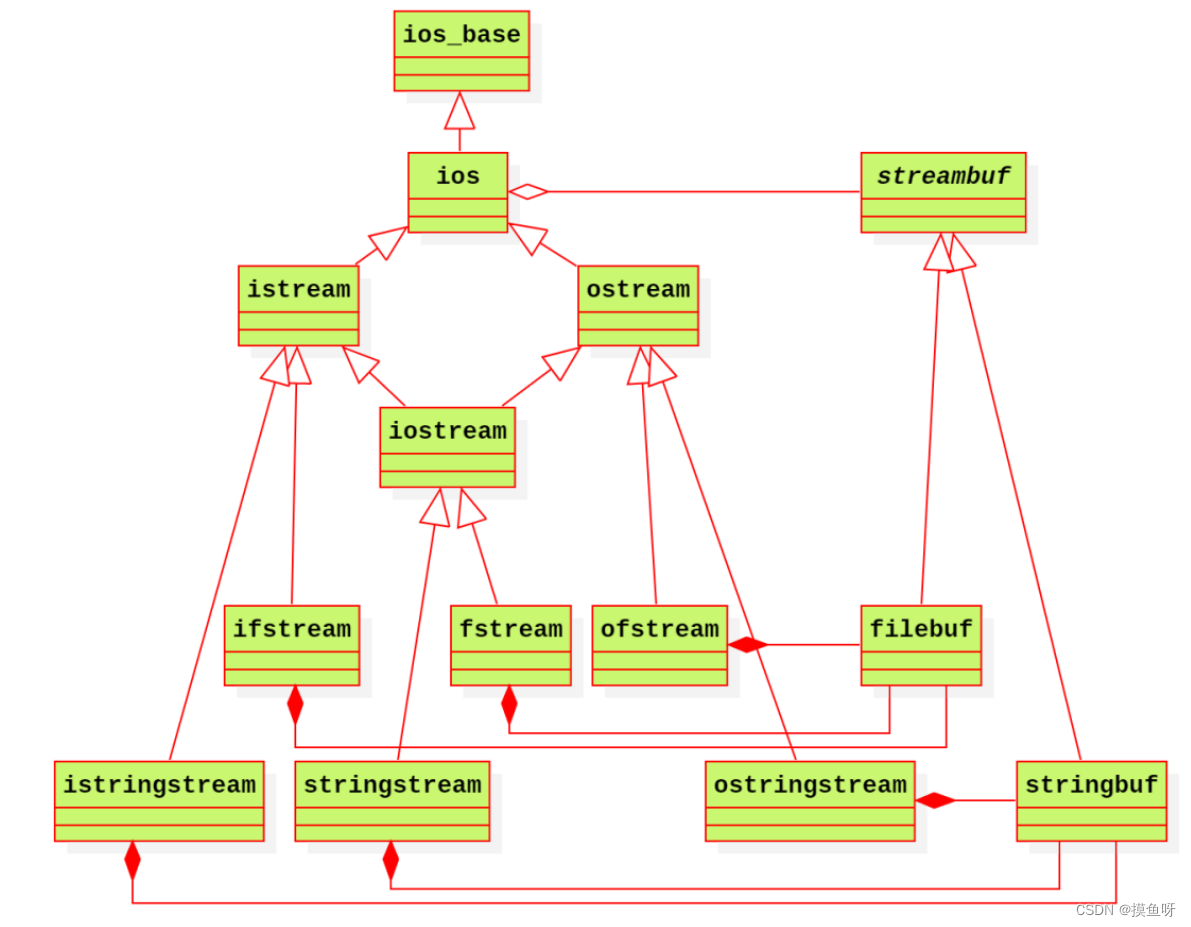
在 c++ 中提供了三类基本流实现:
std::iostream: 标准输入输出流std::fstream: 文件流std::stringstream: 字符流
每一类流内部都有一个 std::streambuf 用作缓冲区。缓冲区的实现又存在两个基本实现:
std::filebuf: 文件缓冲区,主要用于文件读写std::stringbuf: 字符缓冲区,提供字符串的格式化读取和输出操作
#include <iostream>

int main(){
    std::stringbuf buf;

    // 为流指定缓冲区
    std::iostream io(&buf);
}
#include <iostream>
int main(){
std::stringbuf buf;
// 为流指定缓冲区
std::iostream io(&buf);
}
读/写
「流」对「缓冲区」的操作主要为
- 读: 将数据从缓冲区中读出
- 写: 将数据写入缓冲区
读写方式又分为两类:
- 格式化: 所有数据都当作字符,例如
123的读写,将数据视作字符串,对'1'、'2'、'3'这三个字符的读写 - 二进制: 以二进制形式读写数据,例如
123的读写,便是对0x007b二进制的读写
#include <iostream>
#include <fstream>

int main(){

    /*
        流符号 >> 与 << 对数据的读写默认均是「格式化」形式
     */
    int a;
    std::cin >> a;
    std::cout << 123;

    /* 通过指定 std::ios_base::binary 则对数据的读写为二进制形式 */
    std::fstream fs;
    fs.open("file.txt", std::ios_base::in | std::ios_base::binary);
}
#include <iostream>
#include <fstream>
int main(){
/*
流符号 >> 与 << 对数据的读写默认均是「格式化」形式
*/
int a;
std::cin >> a;
std::cout << 123;
/* 通过指定 std::ios_base::binary 则对数据的读写为二进制形式 */
std::fstream fs;
fs.open("file.txt", std::ios_base::in | std::ios_base::binary);
}
streambuf
/* NOTE - 伪代码, 实际不是这样的 */
class streambuf{

protected:
    /* put 写操作三个指针 */
    char_type* pbase(); // pbeg
    char_type* pptr(); // pnext
    char_type* epptr(); // pend
    void setg(char_type*  pbeg,char_type* pnext,char_type* pend);

    /* get 读操作三个指针 */
    char_type* eback(); // gbeg
    char_type* gptr(); // gnext
    char_type* egptr(); // gend
    void setp(char_type* gbeg,char_type* gnext,char_type* gend);

protected:
    /* 缓冲区配置 */
    // 设置缓冲区
    virtual streambuf * setbuf(char_type*, streamsize);
    // 根据相对位置移动内部指针
    virtual pos_type seekoff(off_type, ios_base::seekdir, ios_base::openmode);
    // 根据绝对位置移动内部指针
    virtual pos_type seekpos(pos_type, ios_base::openmode);
    // 同步缓冲区数据(flush),默认什么都不做
    virtual int sync();
    //  流中可获取的字符数,默认返回0
    virtual streamsize showmanyc();

    /* get 操作 */
    // 当get缓冲区不可用时调用,用于获取流中当前的字符,
    // 注意获取和读入的区别,获取并不使gnext指针前移
    // 空则返回EOF
    virtual int_type underflow();
    // 默认返回 underflow(),并使gnext++
    virtual int_type uflow();
    // 从流中读取n个字符到缓冲区s中并返回读到的字符数
    // 默认从当前缓冲区中读取n个字符,若当前缓冲区不可用,则调用一次uflow()
    virtual streamsize xsgetn(char_type* __s, streamsize __n);
    // 回写失败时调用
    virtual int_type pbackfail(int_type __c _IsUnused  = traits_type::eof());

    /* put 操作 */
    // 将缓冲区s的n个字符写入到流中并返回写入的字符数;与输入函数的xsputn相对
    virtual int_type overflow(int_type __c _IsUnused  = traits_type::eof());
    // 当put缓冲区不可用时调用,向流中写入一个字符;当c==EOF时,流写入结束;与输入函数的uflow()相对
    virtual streamsize xsputn(const char_type* __s, streamsize __n);

public:
    /* 缓冲区 */
    pubsetbuf : setbuf()
    pubseekoff : seekoff()
    pubseekpos : seekpos()
    pubsync : sync()

    /* get 操作 */
    in_avail : (用于get的)缓冲区内还有多少个字符可获取,缓冲区可用时返回glast-gnext,否则返回showmanyc()
    snextc : return sbumpc() == EOF ? EOF : sgetc()
    sbumpc : 缓冲区不可用时返回uflow();否则返回(++gnext)[-1]
    sgetc : 缓冲区不可用时返回underflow();否则返回*gnext
    sgetn : xsgetn()
    sputbackc : 缓冲区不可用时返回pbackfail(c);否则返回*(--gnext)
    sungetc : 类似于sputbackc,不过默认调用pbackfail(EOF)

    /* set 操作 */
    sputc : (用于put操作的)缓冲区不可用时,返回overflow(c);否则*pnext++ = c,返回pnext
    sputn : xsputn()
};
/* NOTE - 伪代码, 实际不是这样的 */
class streambuf{
protected:
/* put 写操作三个指针 */
char_type* pbase(); // pbeg
char_type* pptr(); // pnext
char_type* epptr(); // pend
void setg(char_type* pbeg,char_type* pnext,char_type* pend);
/* get 读操作三个指针 */
char_type* eback(); // gbeg
char_type* gptr(); // gnext
char_type* egptr(); // gend
void setp(char_type* gbeg,char_type* gnext,char_type* gend);
protected:
/* 缓冲区配置 */
// 设置缓冲区
virtual streambuf * setbuf(char_type*, streamsize);
// 根据相对位置移动内部指针
virtual pos_type seekoff(off_type, ios_base::seekdir, ios_base::openmode);
// 根据绝对位置移动内部指针
virtual pos_type seekpos(pos_type, ios_base::openmode);
// 同步缓冲区数据(flush),默认什么都不做
virtual int sync();
// 流中可获取的字符数,默认返回0
virtual streamsize showmanyc();
/* get 操作 */
// 当get缓冲区不可用时调用,用于获取流中当前的字符,
// 注意获取和读入的区别,获取并不使gnext指针前移
// 空则返回EOF
virtual int_type underflow();
// 默认返回 underflow(),并使gnext++
virtual int_type uflow();
// 从流中读取n个字符到缓冲区s中并返回读到的字符数
// 默认从当前缓冲区中读取n个字符,若当前缓冲区不可用,则调用一次uflow()
virtual streamsize xsgetn(char_type* __s, streamsize __n);
// 回写失败时调用
virtual int_type pbackfail(int_type __c _IsUnused = traits_type::eof());
/* put 操作 */
// 将缓冲区s的n个字符写入到流中并返回写入的字符数;与输入函数的xsputn相对
virtual int_type overflow(int_type __c _IsUnused = traits_type::eof());
// 当put缓冲区不可用时调用,向流中写入一个字符;当c==EOF时,流写入结束;与输入函数的uflow()相对
virtual streamsize xsputn(const char_type* __s, streamsize __n);
public:
/* 缓冲区 */
pubsetbuf : setbuf()
pubseekoff : seekoff()
pubseekpos : seekpos()
pubsync : sync()
/* get 操作 */
in_avail : (用于get的)缓冲区内还有多少个字符可获取,缓冲区可用时返回glast-gnext,否则返回showmanyc()
snextc : return sbumpc() == EOF ? EOF : sgetc()
sbumpc : 缓冲区不可用时返回uflow();否则返回(++gnext)[-1]
sgetc : 缓冲区不可用时返回underflow();否则返回*gnext
sgetn : xsgetn()
sputbackc : 缓冲区不可用时返回pbackfail(c);否则返回*(--gnext)
sungetc : 类似于sputbackc,不过默认调用pbackfail(EOF)
/* set 操作 */
sputc : (用于put操作的)缓冲区不可用时,返回overflow(c);否则*pnext++ = c,返回pnext
sputn : xsputn()
};