
变量传参
在 Python 中变量的拷贝行为取决于类型和传递方式。
- 不可变对象 : 创建对象的副本,例如
int, float, str, tuple, frozenset - 可变对象 : 传递引用,例如
list, dict, set以及自定义类
对于可变对象存在两种拷贝方式
- 浅拷贝
import copy

list1 = [1,2,3,[1,2]]
list2 = copy.copy(list1)

list1[0] = 10
list1[3][0] = 20    # 修改嵌套对象

print(list2)
# [1, 2, 3, [20, 2]]
import copy
list1 = [1,2,3,[1,2]]
list2 = copy.copy(list1)
list1[0] = 10
list1[3][0] = 20 # 修改嵌套对象
print(list2)
# [1, 2, 3, [20, 2]]
- 深拷贝
import copy

list1 = [1,2,3,[1,2]]
list2 = copy.deepcopy(list1)

list1[0] = 10
list1[3][0] = 20    # 修改嵌套对象

print(list2)
# [1, 2, 3, [1, 2]]
import copy
list1 = [1,2,3,[1,2]]
list2 = copy.deepcopy(list1)
list1[0] = 10
list1[3][0] = 20 # 修改嵌套对象
print(list2)
# [1, 2, 3, [1, 2]]
| 操作/类型 | 不可变对象 | 可变对象 |
|---|---|---|
直接赋值 = |
创建新对象 | 共享引用 |
浅拷贝 copy() |
新对象 | 仅顶层独立 |
深拷贝 deepcopy() |
新对象 | 完全独立副本 |
容器遍历
- 读取数据,但是不能修改数组内的元素
datas = [1,2,3,4]

for data in datas:
    print(data)
    data += 1       # 修改值不影响数组
datas = [1,2,3,4]
for data in datas:
print(data)
data += 1 # 修改值不影响数组
- 索引遍历
datas = [1,2,3,4]

for i in range(len(datas)):
    print(data[i])
    data[i] += 1    # 可修改数组内元素
datas = [1,2,3,4]
for i in range(len(datas)):
print(data[i])
data[i] += 1 # 可修改数组内元素
enumerate()为可迭代对象添加索引,形成可返回(索引,元素)形式的可迭代对象
datas = [1,2,3,4]

for i,data in enumerate(datas):
    print(data)
    data[i] += 1    # 可修改数组内元素
datas = [1,2,3,4]
for i,data in enumerate(datas):
print(data)
data[i] += 1 # 可修改数组内元素
zip()将多个可迭代对象中的元素按顺序配对组合,生成一个新的可迭代对象
datas = [1,2,3,4]
names = ['a','b','b','c']

for data,name in zip(datas,names):
    print(data)
    print(name)
datas = [1,2,3,4]
names = ['a','b','b','c']
for data,name in zip(datas,names):
print(data)
print(name)
- 列表推导式
data = [1,2,3,4]

res1 = [item + 1 for item in data]
# [2,3,4,5]

res2 = [item for item in data if item > 2]
# [3,4]

re3 = {item : item for item in data}
# {1:1,2:2,3:3,4:4}

re4 = {item for item in data}
# {1,2,3,4}
data = [1,2,3,4]
res1 = [item + 1 for item in data]
# [2,3,4,5]
res2 = [item for item in data if item > 2]
# [3,4]
re3 = {item : item for item in data}
# {1:1,2:2,3:3,4:4}
re4 = {item for item in data}
# {1,2,3,4}
枚举
enum
from enum import Enum

class Color(Enum):
    RED = 1
    GREEN = 2
    BLUE = 3


print(Color.RED)
print(Color.GREEN.name)
print(Color.BLUE.value)
from enum import Enum
class Color(Enum):
RED = 1
GREEN = 2
BLUE = 3
print(Color.RED)
print(Color.GREEN.name)
print(Color.BLUE.value)
flag
from enum import Flag

# 不允许重复定义枚举值
@unique
class Permission(Flag):
    NONE = 0
    READ = 1
    WRITE = 2
    EXECUTE = 4

# 枚举组合
rw = Permission.WRITE | Permission.READ

# 可遍历
for prem in rw:
    print(prem)
from enum import Flag
# 不允许重复定义枚举值
@unique
class Permission(Flag):
NONE = 0
READ = 1
WRITE = 2
EXECUTE = 4
# 枚举组合
rw = Permission.WRITE | Permission.READ
# 可遍历
for prem in rw:
print(prem)
IntFlag
flag 不允许执行数值运算,可用 IntFlag 代替
from enum import IntFlag

class Permission(IntFlag):
    NONE = 0
    READ = 1
    WRITE = 2
    EXECUTE = 4

# 枚举组合值为 int 数值
rw = Permission.WRITE | Permission.READ
from enum import IntFlag
class Permission(IntFlag):
NONE = 0
READ = 1
WRITE = 2
EXECUTE = 4
# 枚举组合值为 int 数值
rw = Permission.WRITE | Permission.READ
类
类结构
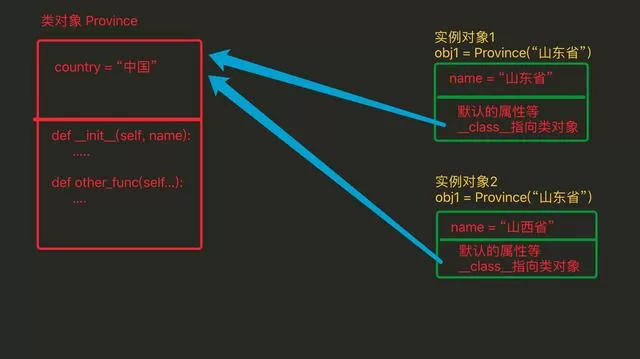
class Test:
    # 类属性,与实例无关
    value:int = 10

    def __init__(self):
        self._value = 10 # 实例变量

    # 实例方法
    def instance_fcn(self):
        self._value
        # NOTE - 在实例方法中,可以使用 self.__class__ 访问类属性,但建议使用类方法代替
        self.__class__.value

    # 类方法
    @classmethod
    def class_fcn(cls):
        cls.value

    # 静态方法
    @staticmethod
    def static_fcn():
        pass
class Test:
# 类属性,与实例无关
value:int = 10
def __init__(self):
self._value = 10 # 实例变量
# 实例方法
def instance_fcn(self):
self._value
# NOTE - 在实例方法中,可以使用 self.__class__ 访问类属性,但建议使用类方法代替
self.__class__.value
# 类方法
@classmethod
def class_fcn(cls):
cls.value
# 静态方法
@staticmethod
def static_fcn():
pass
在 Python 中类中的函数存在三种类型
| 类型 | 定义 | 使用 | 权限 |
|---|---|---|---|
| 实例方法 | 定义 self 参数 |
实例调用 | 访问权限最广 |
| 类方法 | @classmethod 定义 (可省略),定义 cls 参数 |
实例调用、类调用 | 只能访问类级别的属性和方法 |
| 静态方法 | 通过 @staticmethod 定义 |
实例调用、类调用 | 只能访问类静态方法 |
dataclass
由于只能通过 self 来定义「实例属性」,用该方式定义专门存储数据的类型很不直观,不如「类属性」的形式方便。因此,在 python 3.7 引入了 dataclass 工具,可以将「类属性」定义自动转换为「实例属性」,且在 dataclass 中,该属性被称之为「字段」
from typing import ClassVar
from dataclasses import dataclass,field

@dataclass
class InventoryItem:
    # 字段定义
    name: str
    age: int
    unit_price: float
    quantity_on_hand: int = 0
    # NOTE - 可变对象需要使用 field 中的 default_factory 来定义默认值
    # default_factory 输入可调用对象
    addrs: list[str] = field(default_factory=lambda: [], repr=False)

    # 通过 ClassVar 可以定义 dataclass 的类属性
    count: ClassVar[int] = 0

    # 由于 dataclass 会自动生成 __init__ 方法,若需要对字段进行初始化操作需要在 __post_init__ 中进行
    # __post_init__ 在 __init__ 之后被调用
    def __post_init__(self):
        pass
from typing import ClassVar
from dataclasses import dataclass,field
@dataclass
class InventoryItem:
# 字段定义
name: str
age: int
unit_price: float
quantity_on_hand: int = 0
# NOTE - 可变对象需要使用 field 中的 default_factory 来定义默认值
# default_factory 输入可调用对象
addrs: list[str] = field(default_factory=lambda: [], repr=False)
# 通过 ClassVar 可以定义 dataclass 的类属性
count: ClassVar[int] = 0
# 由于 dataclass 会自动生成 __init__ 方法,若需要对字段进行初始化操作需要在 __post_init__ 中进行
# __post_init__ 在 __init__ 之后被调用
def __post_init__(self):
pass
包管理
import
package.py
print(__name__)

# 创建动态全局变量
def create_global(key,value):
    dynamic_g = globals()
    dynamic_g[key] = value

# 值类型全局变量
PI = '3.14'

# 类全局变量
class Person:
    age : int = 18
student = Person()
print(__name__)
# 创建动态全局变量
def create_global(key,value):
dynamic_g = globals()
dynamic_g[key] = value
# 值类型全局变量
PI = '3.14'
# 类全局变量
class Person:
age : int = 18
student = Person()
main.py
# 导入 package.py 脚本,生成 module ,且同一 package.py 全局只会导入一次
import package
# 使用上次生成的 module
import package as pk

# 导入操作是「赋值」
from package import PI, student

if __name__ == '__main__':

    package.create_global('var', 'dynamic')
    print(pk.var)

    # 不可变对象,深拷贝
    print(PI)
    PI = 'pi'
    print(pk.PI)

    # 可变对象赋值,浅拷贝
    print(student.age)
    student.age = 20
    print(pk.student.age)
# 导入 package.py 脚本,生成 module ,且同一 package.py 全局只会导入一次
import package
# 使用上次生成的 module
import package as pk
# 导入操作是「赋值」
from package import PI, student
if __name__ == '__main__':
package.create_global('var', 'dynamic')
print(pk.var)
# 不可变对象,深拷贝
print(PI)
PI = 'pi'
print(pk.PI)
# 可变对象赋值,浅拷贝
print(student.age)
student.age = 20
print(pk.student.age)
Terminal
$python main.py
package
dynamic
3.14
3.14
18
20
查找
import sys

# import 根据 path 查找 module
# 优先查找文件夹 package,然后再查找 .py 文件
print(sys.path)


# . .. 表示查找的相对路径
from . import module
from .. import parent
import sys
# import 根据 path 查找 module
# 优先查找文件夹 package,然后再查找 .py 文件
print(sys.path)
# . .. 表示查找的相对路径
from . import module
from .. import parent
异常处理
try:
    raise ValueError('异常')
except (ValueError, TypeError) as e:
    print(f'{e}')
finally:
    print('finally')

# 自定义异常
class CustomException(Exception):
    pass
try:
raise ValueError('异常')
except (ValueError, TypeError) as e:
print(f'{e}')
finally:
print('finally')
# 自定义异常
class CustomException(Exception):
pass
BaseException       所有异常的基类
 +-- SystemExit       解释器请求退出
 +-- KeyboardInterrupt     用户中断执行(通常是输入^C)
 +-- GeneratorExit      生成器(generator)发生异常来通知退出
 +-- Exception        常规错误的基类
   +-- StopIteration       迭代器没有更多值
   +-- StopAsyncIteration       必须通过异步迭代器对象的__anext__()方法引发以停止迭代
   +-- ArithmeticError         所有数值计算错误的基类
   |  +-- FloatingPointError       浮点计算错误
   |  +-- OverflowError         数值运算超出最大限制
   |  +-- ZeroDivisionError       除(或取模)零 (所有数据类型
   +-- AssertionError         断言语句失败
   +-- AttributeError         对象没有这个属性
   +-- BufferError          与缓冲区相关的操作时引发
   +-- EOFError            没有内建输入,到达EOF 标记
   +-- ImportError           导入失败
   |  +-- ModuleNotFoundError    找不到模块
   +-- LookupError           无效数据查询的基类
   |  +-- IndexError           序列中没有此索引(index)
   |  +-- KeyError            映射中没有这个键
   +-- MemoryError           内存溢出错误
   +-- NameError            未声明、初始化对象
   |  +-- UnboundLocalError       访问未初始化的本地变量
   +-- OSError             操作系统错误,
   |  +-- BlockingIOError        操作将阻塞对象设置为非阻塞操作
   |  +-- ChildProcessError       子进程上的操作失败
   |  +-- ConnectionError        与连接相关的异常的基类
   |  |  +-- BrokenPipeError       在已关闭写入的套接字上写入
   |  |  +-- ConnectionAbortedError   连接尝试被对等方中止
   |  |  +-- ConnectionRefusedError   连接尝试被对等方拒绝
   |  |  +-- ConnectionResetError    连接由对等方重置
   |  +-- FileExistsError        创建已存在的文件或目录
   |  +-- FileNotFoundError       请求不存在的文件或目录
   |  +-- InterruptedError       系统调用被输入信号中断
   |  +-- IsADirectoryError       在目录上请求文件操作
   |  +-- NotADirectoryError      在不是目录的事物上请求目录操作
   |  +-- PermissionError       在没有访问权限的情况下运行操作
   |  +-- ProcessLookupError      进程不存在
   |  +-- TimeoutError         系统函数在系统级别超时
   +-- ReferenceError        弱引用试图访问已经垃圾回收了的对象
   +-- RuntimeError         一般的运行时错误
   |  +-- NotImplementedError   尚未实现的方法
   |  +-- RecursionError      解释器检测到超出最大递归深度
   +-- SyntaxError          Python 语法错误
   |  +-- IndentationError     缩进错误
   |     +-- TabError     Tab 和空格混用
   +-- SystemError       一般的解释器系统错误
   +-- TypeError        对类型无效的操作
   +-- ValueError       传入无效的参数
   |  +-- UnicodeError       Unicode 相关的错误
   |     +-- UnicodeDecodeError   Unicode 解码时的错误
   |     +-- UnicodeEncodeError   Unicode 编码时错误
   |     +-- UnicodeTranslateError Unicode 转换时错误
   +-- Warning            警告的基类
      +-- DeprecationWarning     关于被弃用的特征的警告
      +-- PendingDeprecationWarning  关于构造将来语义会有改变的警告
      +-- RuntimeWarning      可疑的运行行为的警告
      +-- SyntaxWarning      可疑的语法的警告
      +-- UserWarning       用户代码生成的警告
      +-- FutureWarning      有关已弃用功能的警告的基类
      +-- ImportWarning      模块导入时可能出错的警告的基类
      +-- UnicodeWarning      与Unicode相关的警告的基类
      +-- BytesWarning       bytes和bytearray相关的警告的基类
      +-- ResourceWarning      与资源使用相关的警告的基类
BaseException 所有异常的基类
+-- SystemExit 解释器请求退出
+-- KeyboardInterrupt 用户中断执行(通常是输入^C)
+-- GeneratorExit 生成器(generator)发生异常来通知退出
+-- Exception 常规错误的基类
+-- StopIteration 迭代器没有更多值
+-- StopAsyncIteration 必须通过异步迭代器对象的__anext__()方法引发以停止迭代
+-- ArithmeticError 所有数值计算错误的基类
| +-- FloatingPointError 浮点计算错误
| +-- OverflowError 数值运算超出最大限制
| +-- ZeroDivisionError 除(或取模)零 (所有数据类型
+-- AssertionError 断言语句失败
+-- AttributeError 对象没有这个属性
+-- BufferError 与缓冲区相关的操作时引发
+-- EOFError 没有内建输入,到达EOF 标记
+-- ImportError 导入失败
| +-- ModuleNotFoundError 找不到模块
+-- LookupError 无效数据查询的基类
| +-- IndexError 序列中没有此索引(index)
| +-- KeyError 映射中没有这个键
+-- MemoryError 内存溢出错误
+-- NameError 未声明、初始化对象
| +-- UnboundLocalError 访问未初始化的本地变量
+-- OSError 操作系统错误,
| +-- BlockingIOError 操作将阻塞对象设置为非阻塞操作
| +-- ChildProcessError 子进程上的操作失败
| +-- ConnectionError 与连接相关的异常的基类
| | +-- BrokenPipeError 在已关闭写入的套接字上写入
| | +-- ConnectionAbortedError 连接尝试被对等方中止
| | +-- ConnectionRefusedError 连接尝试被对等方拒绝
| | +-- ConnectionResetError 连接由对等方重置
| +-- FileExistsError 创建已存在的文件或目录
| +-- FileNotFoundError 请求不存在的文件或目录
| +-- InterruptedError 系统调用被输入信号中断
| +-- IsADirectoryError 在目录上请求文件操作
| +-- NotADirectoryError 在不是目录的事物上请求目录操作
| +-- PermissionError 在没有访问权限的情况下运行操作
| +-- ProcessLookupError 进程不存在
| +-- TimeoutError 系统函数在系统级别超时
+-- ReferenceError 弱引用试图访问已经垃圾回收了的对象
+-- RuntimeError 一般的运行时错误
| +-- NotImplementedError 尚未实现的方法
| +-- RecursionError 解释器检测到超出最大递归深度
+-- SyntaxError Python 语法错误
| +-- IndentationError 缩进错误
| +-- TabError Tab 和空格混用
+-- SystemError 一般的解释器系统错误
+-- TypeError 对类型无效的操作
+-- ValueError 传入无效的参数
| +-- UnicodeError Unicode 相关的错误
| +-- UnicodeDecodeError Unicode 解码时的错误
| +-- UnicodeEncodeError Unicode 编码时错误
| +-- UnicodeTranslateError Unicode 转换时错误
+-- Warning 警告的基类
+-- DeprecationWarning 关于被弃用的特征的警告
+-- PendingDeprecationWarning 关于构造将来语义会有改变的警告
+-- RuntimeWarning 可疑的运行行为的警告
+-- SyntaxWarning 可疑的语法的警告
+-- UserWarning 用户代码生成的警告
+-- FutureWarning 有关已弃用功能的警告的基类
+-- ImportWarning 模块导入时可能出错的警告的基类
+-- UnicodeWarning 与Unicode相关的警告的基类
+-- BytesWarning bytes和bytearray相关的警告的基类
+-- ResourceWarning 与资源使用相关的警告的基类
泛型模板
from typing import Generic, TypeVar, Sequence


T = TypeVar('T')  # 定义类型变量

# 泛型类
class GenericBox(Generic[T]):
    def __init__(self, content: T):
        self.content = content

    def get_content(self) -> T:
        return self.content

K = TypeVar('K',int,str) # 限定类型
def fcn(items: Sequence[K]) -> K:
    return items[0]

# 使用
int_box = GenericBox[int](42)
print(int_box.get_content() + 1)  # 输出: 43

str_box = GenericBox[str]("Hello")
print(str_box.get_content().upper())  # 输出: HELLO
from typing import Generic, TypeVar, Sequence
T = TypeVar('T') # 定义类型变量
# 泛型类
class GenericBox(Generic[T]):
def __init__(self, content: T):
self.content = content
def get_content(self) -> T:
return self.content
K = TypeVar('K',int,str) # 限定类型
def fcn(items: Sequence[K]) -> K:
return items[0]
# 使用
int_box = GenericBox[int](42)
print(int_box.get_content() + 1) # 输出: 43
str_box = GenericBox[str]("Hello")
print(str_box.get_content().upper()) # 输出: HELLO
在 python >= 3.12 之后引入新语法
# Python 3.12+ 新语法
class Box[T]:
    def __init__(self, content: T):
        self.content = content

    def get_content(self) -> T:
        return self.content

# 使用
box = Box("Hello")  # 自动推断 T 为 str
# Python 3.12+ 新语法
class Box[T]:
def __init__(self, content: T):
self.content = content
def get_content(self) -> T:
return self.content
# 使用
box = Box("Hello") # 自动推断 T 为 str
注解
类型注解
对于常规类型 int, float, str 以及自定义对象类型
def fcn(param1: str, param2:int):
    pass
def fcn(param1: str, param2:int):
pass
但对于 set, list, dict 泛型模板类,python <= 3.8 则不能直接使用类型注解
def fcn(param1: list[int]):
    pass
def fcn(param1: list[int]):
pass
会报错
TypeError: 'type' object is not subscriptableTypeError: 'type' object is not subscriptable
这就需要使用 typing 库
import typing

def fcn(param1: typeing.List[int]):
    pass
import typing
def fcn(param1: typeing.List[int]):
pass
对于自定义泛型模板类则没问题
def fcn(param:GenericBox[int]):
    pass
def fcn(param:GenericBox[int]):
pass
TypeAlias
from typing import TypeAlias, List

# 为对象类型取别名
IntListType: TypeAlias =  List[int]
from typing import TypeAlias, List
# 为对象类型取别名
IntListType: TypeAlias = List[int]
可调用对象
使用 Callable 可以声明可调用对象的传入参数类型与返回值类型
from typing import Callable

def fcn_hook(id:int,msg:str) -> bool:
    pass

# Callable[[形参类型], 返回类型]
def fcn(hook: Callable[[int,str], bool]) -> bool:
    return hook(1,'')

fcn(fcn_hook)
from typing import Callable
def fcn_hook(id:int,msg:str) -> bool:
pass
# Callable[[形参类型], 返回类型]
def fcn(hook: Callable[[int,str], bool]) -> bool:
return hook(1,'')
fcn(fcn_hook)
Optional
from typing import Optional

def greet(name: Optional[list[RoleEnum]] | str = None):
    """
        name 的取值类型有:
        - None : Optional 自动添加的
        - list[RoleEnum] :通过 Optional 定义的
        - str : 同通过 '|' 添加的
    """
    pass
from typing import Optional
def greet(name: Optional[list[RoleEnum]] | str = None):
"""
name 的取值类型有:
- None : Optional 自动添加的
- list[RoleEnum] :通过 Optional 定义的
- str : 同通过 '|' 添加的
"""
pass
Annotated
Annotated 是 Python 类型注解系统中的一个工具不是具体的函数,允许为已有的类型添加元数据。
- 提供额外的类型信息:为类型注解添加额外的上下文或约束,这些信息可以被静态类型检查器用来进行更精确的类型检查。
- 增强代码可读性
- 自定义类型检查:与静态类型检查器配合使用,实现自定义的类型检查逻辑。
- 框架和库的开发:在开发框架或库时,Annotated 可以用来定义特殊的类型注解,这些注解可以被框架内部逻辑使用,以实现特定的功能。
from typing import Annotated

"""
    - type : 是原本的类型注解
    - metadata : 是你想要附加的额外信息,可以是任意 Python 对象,如字符串、整数、自定义类的实例等
"""
Annotated[type, metadata]
from typing import Annotated
"""
- type : 是原本的类型注解
- metadata : 是你想要附加的额外信息,可以是任意 Python 对象,如字符串、整数、自定义类的实例等
"""
Annotated[type, metadata]
Note
Annotated 的作用只是让原类型增加一些 metadata 信息,这些信息并不会影响原类型的使用。一些框架会对这些 metadata 信息进行读取,例如 pydantic 库。