
等待
睡眠等待
睡眠等待防止了线程在CPU上长时间忙等(死循环检测条件达成情况),通过睡眠一段时间来让线程安静一会儿。
void WaitCondition()
{
    bool flag = false;
    std::unique_lock<std::mutex> lk(m);
    while(!flag)
    {
        lk.unlock(); // 解锁互斥量

        // 睡 100 ms 在起来看看
        std::this_thread::sleep_for(std::chrono::milliseconds(100));

        lk.lock(); // 再锁互斥量

        // 条件达成状态
        flag = GetConditionState();
    }
}条件量
当条件满足后,才会唤醒等待线程,线程不用一直死循环等待条件完成。
#include <condition_variable>

std::mutex m;
std::condition_variable cond;

void ProcessCondition()
{
    // 满足条件后,唤醒等待线程
    cond.notify_one();
    cond.notify_all();
}

void WaitCondition()
{
    bool flag = false;

    // 管理锁不能用 std::lock_guard,因为条件量内部也需要进行加锁、解锁
    std::unique_lock<std::mutex> lk(m);

    // 等待条件满足
    cond.wait(lk,
        []{return GetConditionState() == true;});
}future
线程返回值
#include <future>
int main()
{
    // 会启动一个线程执行函数实体
    std::future<int> res = std::async(Run,args);

    // 阻塞等待子线程运行完毕
    res.wait();

    // get 会阻塞等待返回值
    res.get();
}Note
std::future的wait(),get()只能调用一次,想要调用多次,得使用 std::share_future
回调函数执行控制:
// 直接启动回调函数
auto f6 = std::async(std::launch::async,Run,args);

// 延迟执行,在wait()或get()调用时执行
auto f7 = std::async(std::launch::deferred,Run,args);

// 实现选择执行方式
auto f8 = std::async(
          std::launch::deferred | std::launch::async,
          Run,args);
promise
将std::promise对象放入一个线程1,关联的std::future对象放入线程2,就能实现线程1通过std::promise发送数据,线程2通过std::future获取数据。
// 创建
std::promise<T> pr;

// 获取 future
std::future<T> ft = pr.get_future();

// promise 放数据
pr.set_value(T);packaged_task
std::packaged_task 只是将调用实体进行封装,然后将返回值放入 std::future 。本质上就是std::promise`函数实体传递的简化版。
void Run(args){}

// 封装任务,变成一个可调用实例,就能用来开多线程
std::packaged_task<void(args)> task(Run);

// 获取 future
std::future<void> res = task.get_future();

// 执行任务
task(args);返回异常
std::async与std::packaged_task中的回调实体在子线程发生异常时,可以通过std::future返回异常。std::promise需要返回异常时,则需要用set_exception()传递异常CPPextern std::promise<double> some_promise; try { some_promise.set_value(calculate_value()); } catch(...) { // 当 get 时,会抛出异常 some_promise.set_exception(std::current_exception()); // 拷贝异常,不会抛出 some_promise.set_exception(std::copy_exception(std::logic_error("foo "))); }extern std::promise<double> some_promise; try { some_promise.set_value(calculate_value()); } catch(...) { // 当 get 时,会抛出异常 some_promise.set_exception(std::current_exception()); // 拷贝异常,不会抛出 some_promise.set_exception(std::copy_exception(std::logic_error("foo "))); }
shared_future
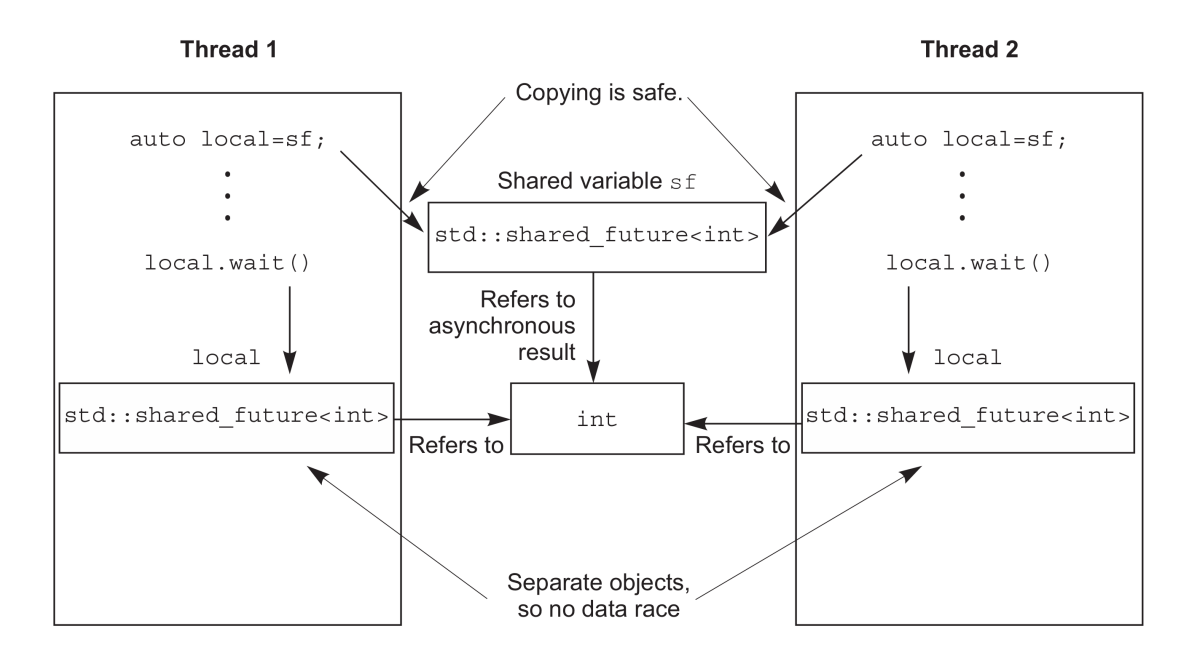
作用:std::future 是转移类型,且只能获取一次返回值,如果在多个线程中调用get()就会导致异常。std::shared_future 就是为了解决该问题,shared_future的实现是拷贝类型,允许子线程能拥有自己的shared_future对象,那就不存在抢占问题了。
类型转换:
std::promise<int> p;

// 期望值 f 是合法的,临时变量类型转移
std::future<int> f(p.get_future());
assert(f.valid());

// 移交所有权
std::shared_future<int> sf(std::move(f));
assert(!f.valid()); // 期望值 f 现在是不合法的
assert(sf.valid()); // sf 现在是合法的

// 调用 share() 直接创建一个 shared_future
std::promise<int> p1;
std::shared_future<int> sf1(p1.get_future().share())综合案例
template <typename F, typename... Args>
auto submit(F &&f, Args &&...args) -> std::future<typename std::result_of<F(Args...)>::type>
{
    // 绑定函数
    std::function<void()> func = std::bind(std::forward<F>(f), std::forward<Args>(args)...);

    // 获取函数返回值类型
    using return_type = typename std::result_of<F(Args...)>::type;

    // 创建一个指向任务的只能指针
    // return_type () 定义的是函数类型,例如 void()
    auto task = std::make_shared< std::packaged_task<return_type ()> >(func);

    // 因为队列是 std::queue< std::function<void()> >,需要在封装一层,才能塞入队列
    std::function<void()> warpper_func = [task]()
    {
        (*task)();
    };

    // 队列通用安全封包函数,并压入安全队列
    m_queue.enqueue(warpper_func);

    // 唤醒一个等待中的线程
    m_conditional_lock.notify_one();

    return task->get_future();
}超时等待
时钟
- 当前时间:可以通过时钟对象的
_clock::now()方法获取,例如std::chrono::system_clock::now()获取当前系统时间(windows 右下角那个时间) - 时钟节拍:一秒钟有多少下。例如 1 秒钟 25 下,就是 1 个节拍
1 / 25秒,即std::ratio<1,25>;时钟节拍为 2.5 秒一次,就是 1 个节拍 2.5 秒,写分数得 1 个节拍5 / 2秒,即std::ratio<5,2>。这个有系统决定 - 稳定时钟:时钟节拍均匀分布(无论是否与周期匹配),并且不可修改。通过
is_steady可以查看
#include <chrono>

// 系统时钟,可以自定义时间,有些会出问题
std::chrono::system_clock

// 稳定时钟,固定不变,不能修改,从 boot 启动开始计时
std::chrono::steady_clock

// 精度最高的时钟,具有最小的时钟节拍
std::chrono::high_resolution_clockNote
- 系统时钟:就是windows右下角那个时间,生活中使用的时间,可以修改
- 稳定时钟:从 boot 启动开始计时,由机器计算,不能人为修改,用来统计程序运行时长更准确
时间段
std::chrono::duration<rep,period>作用: 表示一段时间,即有多少个时间单位period,并且能进行时间段的运算。
- rep: 表示时间段的数值类型,例如
int,double,long等。 - period: 一个时间段的单位时间,即
std::ratio<60,1>表示的两个节拍之间的间隔时间。
// 毫秒:1秒钟1000个节拍,就是0.001秒1个节拍
typedef duration<long long, std::ratio<1,1000>> milliseconds;

// 秒:1秒钟1个节拍
typedef duration<long long,std::ratio<1,1> > seconds;

// 分:60秒钟1个节拍
typedef duration<int, std::ratio<60,1> > minutes;

// 获取时间单位的数值
minutes minu(5); // 5 个单位时间,这里就是 5 分钟
minu.count(); // minu 时间段是多少个单位时间,返回的就是 5

// 系统库自带
std::chrono::milliseconds
std::chrono::seconds
std::chrono::minutes

// 单位转换
td::chrono::milliseconds ms(54802);
std::chrono::seconds s = std::chrono::duration_cast<std::chrono::seconds>(ms);时间点
template< class Clock, class Duration = typename Clock::duration >
class time_point;**作用:**时间点就是_clock::now()的返回值,它和时间精度与时钟有关
- 时间精度: 即
std::chrono::duration,利用时间段就表明这个时间点是精确到分、秒还是小时 - 时钟: 这个时间点是用什么钟看的,例如手表、手机等。
// 正确:
std::chrono::system_clock::time_point tp = std::chrono::system_clock::now();

// 错误,每个时钟的时间点,时钟自己才清楚,不能瞎定义
std::chrono::time_point<std::chrono::system_clock,std::chrono::nanoseconds> time_point;
time_point = std::chrono::system_clock::now();显示当前系统时间
// 显示当前系统时间
auto time = std::chrono::system_clock::now();

// time_since_epoch:获取从 1970-01-01T00:00:00 到现在时间点的 std::chrono::duration
// 再将 std::chrono::duration 转换为以 std::chrono::seconds 为单位的 std::chrono::duration
// 然后获取 count() ,就能知道从 1970-01-01T00:00:00 到现在过了多少秒
std::time_t duration = std::chrono::duration_cast<std::chrono::seconds>(time.time_since_epoch()).count();
// 与上面的操作等价
std::time_t duration = std::chrono::system_clock::to_time_t(time);

// 将秒转换为实际时间
std::string strTime = std::ctime(&duration);Note
time_since_epoch() 在不同时钟里的区别
system_clock:从 1970-01-01T00:00:00 到现在时间点的时间段steady_clock: 从 boot 启动到现在时间点的时间段
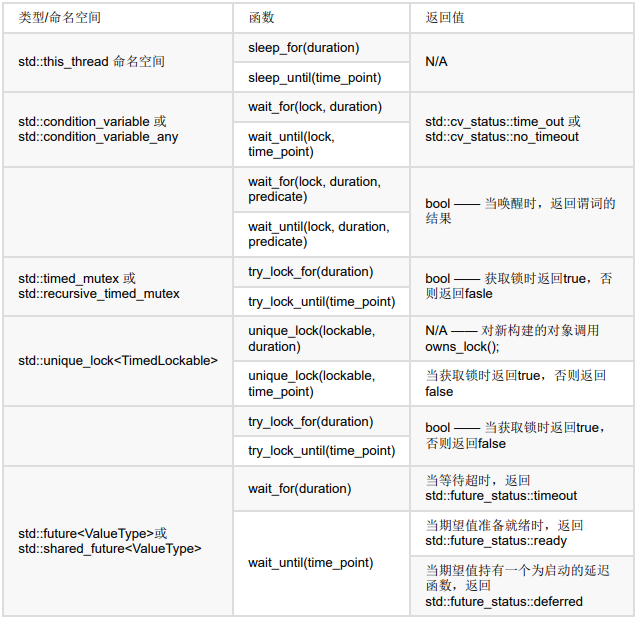
等待超时
wait_for:等待一个时间段CPPstd::future<int> f=std::async(some_task); // 等待 35 ms // 等待成功返回:std::future_status::ready // 等待超时返回:std::future_status::timeout f.wait_for(std::chrono::milliseconds(35));std::future<int> f=std::async(some_task); // 等待 35 ms // 等待成功返回:std::future_status::ready // 等待超时返回:std::future_status::timeout f.wait_for(std::chrono::milliseconds(35));wait_unit:等待一个时间点CPPstd::future<int> f=std::async(some_task); // 从现在开始,经过 500ms 后的时间点 std::chrono::steady_clock::time_point timeout= std::chrono::steady_clock::now() + std::chrono::milliseconds(500); // 等待成功返回:std::future_status::ready // 等待超时返回:std::future_status::timeout f.wait_unit(timeout);std::future<int> f=std::async(some_task); // 从现在开始,经过 500ms 后的时间点 std::chrono::steady_clock::time_point timeout= std::chrono::steady_clock::now() + std::chrono::milliseconds(500); // 等待成功返回:std::future_status::ready // 等待超时返回:std::future_status::timeout f.wait_unit(timeout);
通讯顺序进程
概念: 通讯顺序进程 (CSP,Communicating Sequential Processer) 其思路就是将业务流程划分为一个个完全独立的子模块,子模块之间的交流只剩输入与输出,即各个子模块按照一定顺序执行,且各个模块运行期间不进行通讯,最终所有模块的运行情况可以描述成一个状态机模型。
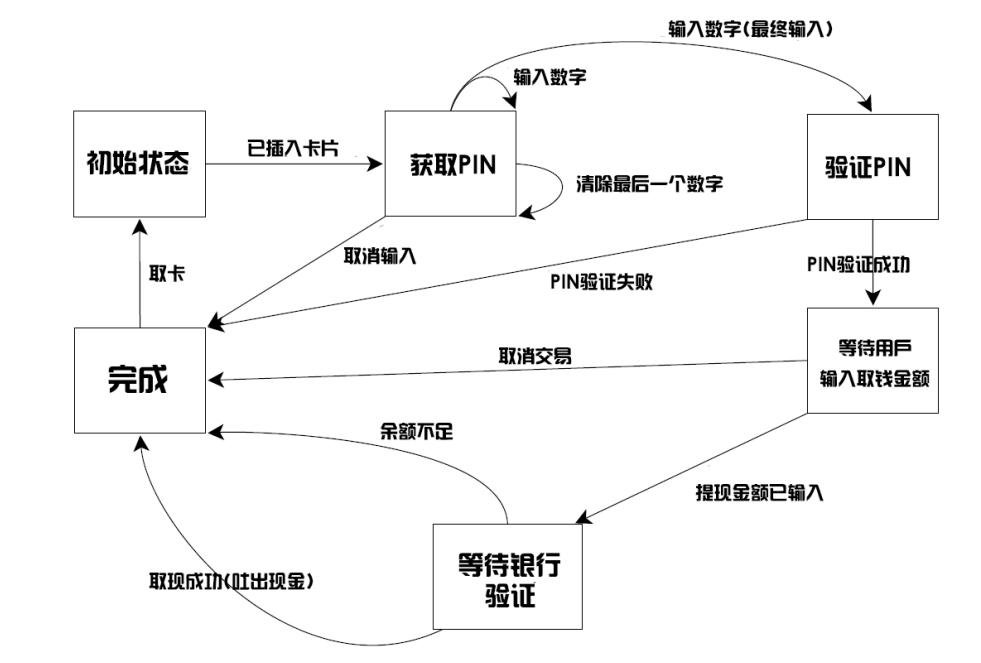
矩形框描述的功能就是各个互不相关的子模块,只有输入和输出的交流,且具有执行顺序。
优点:
- 结构清晰,功能解耦
- 没有共享数据到处传递,也就不存在多线程竞争问题